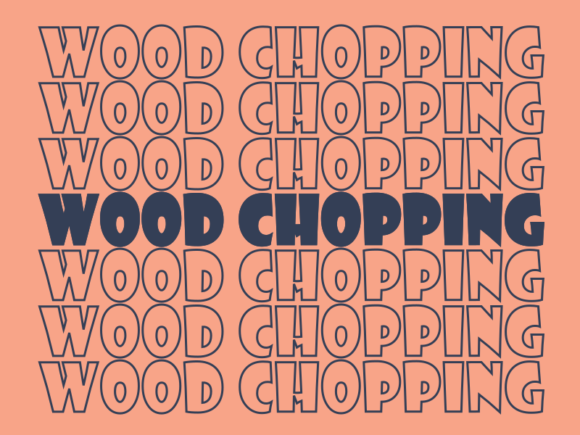
Wood Chopping SVG Cut File: Precision, Versatility, and Real-World Craft Power
If you’ve ever spent time adjusting a design only to watch it blur or pixelate at larger sizes—or worse, scrapped a vinyl decal because the edges didn’t cut cleanly—you already know why a Wood Chopping SVG Cut File isn’t just another download. It’s a practical, scalable tool that works *with* your machine, not against it. Unlike raster images (JPG, PNG), this is a true vector graphic—mathematically defined paths and curves—so whether you’re cutting a 2-inch wooden coaster or a 24-inch wall quote, every line stays razor-sharp.
Where This File Fits Into Real Projects—Not Just Theory
Think of the Wood Chopping SVG Cut File as a quiet multitasker: no fanfare, but always ready when needed. A small-batch candle maker in Portland uses it to laser-cut birch plywood labels for seasonal “Forest Cedar” jars—clean grain lines preserved, no sanding required. A homeschool parent in Ohio cuts the same file from felt to make tactile spelling tiles for her third grader. A wedding planner in Nashville layers it into acrylic place cards, then adds foil stamping on top. None of these users opened Photoshop. They downloaded, imported, resized, and cut—often in under five minutes.
The key isn’t just that it scales—it’s that it *behaves predictably*. Your Cricut Maker handles it differently than your Silhouette Cameo 4? No problem. The vector paths retain anchor points and stroke consistency, so pressure settings, blade depth, and material thickness adjustments stay intuitive—not guesswork.
More Than Just Wood: Materials That Actually Work
Yes, it’s called a “wood chopping” design—but don’t let the name limit your thinking. The file itself has no material bias. What matters is your machine’s capability and your substrate’s behavior:
- Vinyl: Matte black permanent vinyl on a coffee shop chalkboard menu—crisp, legible, weather-resistant.
- Felt & Cotton: Appliqué patches for scout troop vests or fabric-based classroom reward charts—no fraying, no sewing needed for simple shapes.
- Leather: Minimalist keychains or journal covers with subtle texture contrast—cut clean, emboss later if desired.
- Thin Plywood & Basswood: Laser-cut ornaments, shelf dividers, or DIY board game pieces—grain-friendly alignment, minimal charring.
That flexibility means one purchase supports multiple workflows. A freelance graphic designer might use the same Wood Chopping SVG Cut File to mock up a rustic brand identity (for a local maple syrup brand), then hand off production-ready files to their client’s print shop—and still use it personally to cut leather bookmarks for a book club gift.
When Timing—and Simplicity—Matter Most
Consider the teacher preparing for a “Pioneer Day” unit. She needs 30 student name tags, a bulletin board header, and matching folder labels—all due in 48 hours. With a Wood Chopping SVG Cut File, she imports once into Cricut Design Space, duplicates the layer, changes fill colors to match her classroom palette (forest green, burnt orange, cream), resizes each element appropriately, and hits “Make It.” No tracing, no font substitutions, no last-minute panic over missing fonts or corrupted downloads.
Or imagine the Etsy seller launching a new line of cabin-themed home décor. Instead of commissioning custom illustrations (cost: $150–$300+), she licenses a well-structured Wood Chopping SVG Cut File, recolors it to match her existing product photos, and cuts samples for Instagram flat lays—all before breakfast. That speed compounds: faster prototyping → quicker customer feedback → smarter inventory decisions.
What to Check Before You Cut
Not all SVGs are built alike—even if they share the same name. Before downloading or purchasing a Wood Chopping SVG Cut File, scan for these practical markers:
- Layer organization: Are cut lines grouped logically? Can you easily hide or delete background elements without disrupting the main shape?
- Stroke vs. fill: Is the design built with clean 0.001pt strokes (ideal for cutting) or filled shapes with hidden outlines? Messy strokes cause double-cuts or skipped paths.
- Compatibility notes: Does the listing specify tested machines (e.g., “works with Cricut Explore Air 2 and Silhouette Portrait 3”)? Generic claims like “Cricut compatible” aren’t enough—firmware updates change how some files render.
- Licensing clarity: Is personal use allowed? Small business? Digital resale? If you’re designing printable planners to sell on Gumroad, confirm commercial rights upfront—avoid takedowns or rework later.
A well-made Wood Chopping SVG Cut File includes embedded registration marks, pre-grouped layers for multi-material projects (e.g., wood base + vinyl accent), and optional shadow or engrave variants—details that save real time when you’re juggling deadlines.
Why This Isn’t Just Another Craft Download
SVG cut files thrive where consistency meets creativity. You’re not locked into one look. Change the color to match your brand’s hex code. Flip it horizontally for mirrored wall art. Combine it with a handwritten font for a layered invitation suite. Nest multiple instances to maximize material yield on a 12x24” cutting mat. These aren’t hypotheticals—they’re daily efficiencies for educators printing classroom signs, bloggers creating Pinterest-worthy printables, or boutique owners refreshing seasonal window decals.
And because vectors don’t degrade, your 2024 holiday banner can become next year’s spring garden sign—just tweak the color palette and swap out supporting text. No quality loss. No redrawn assets. No wasted time.
At its core, the Wood Chopping SVG Cut File delivers reliability you can build on—not hype you have to justify. Whether you’re cutting your first piece of balsa wood or your thousandth vinyl sticker, it’s the kind of resource that quietly makes your process smoother, your output sharper, and your creative confidence steadier.