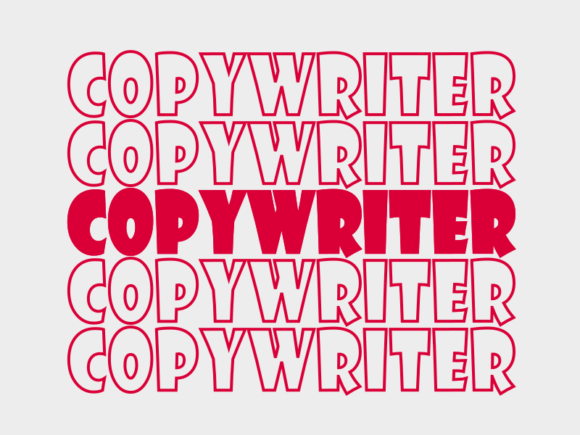
Copywriter SVG Cut File: Precision, Flexibility, and Real-World Craft Integration
A Copywriter SVG Cut File is more than a decorative graphic—it’s a production-ready vector asset built for precision execution. Unlike raster images, it’s composed of mathematical paths, not pixels. That means whether you’re scaling it to fit a business card or enlarging it for a 36-inch wall decal, the edges stay razor-sharp, the curves remain smooth, and no quality is lost. This isn’t theoretical convenience—it’s operational reliability baked into the file itself.
For creators who move between ideation and output—whether designing classroom materials, launching a small-batch product line, or producing branded event signage—the Copywriter SVG Cut File sits at a critical junction: where concept meets cut. It bridges writing intent (the copy) with physical or digital realization (the cut). The “copywriter” in the name signals intentionality—not just visual appeal, but text-driven communication designed to be legible, impactful, and reproducible across substrates.
How It Fits Into Your Existing Workflow
You don’t need to overhaul your process to use a Copywriter SVG Cut File. Instead, it slots in where clarity and consistency matter most:
- Before a project: Use it during planning to test layout feasibility—import the SVG into your design software or cutting machine interface to preview sizing, spacing, and layering before committing materials or time.
- During execution: Load it directly into Silhouette Studio, Cricut Design Space, or Inkscape. Adjust stroke width, set cut lines, assign colors to layers, and align with other assets—all without degrading fidelity.
- After finalization: Reuse the same file across formats—convert it to PNG for web use, embed it in a Canva template for social graphics, or export as PDF for print-ready documents—knowing the source remains unchanged.
This adaptability reduces version drift. When you tweak copy in a document and need an updated cut file, you’re not redrawing from scratch—you’re editing text within the vector path or swapping out grouped elements, preserving alignment, spacing, and stylistic integrity.
Material Agnosticism: From Paper to Leather and Beyond
A Copywriter SVG Cut File doesn’t dictate your medium—it defers to your machine’s capabilities and your project’s purpose. If your Cricut Maker or Silhouette Cameo supports rotary blades, you can cut cleanly through cotton fabric for custom apparel labels. With a fine-point blade, it handles delicate vellum for wedding programs. With a deep-cut setting, it scores leather for journal covers or embossed bookmarks.
This isn’t about pushing hardware limits—it’s about matching output to outcome. A teacher printing classroom posters on cardstock uses the same SVG that a boutique owner applies to vinyl for storefront window decals. The file stays constant; only the material, blade type, and pressure settings change. That consistency saves setup time, minimizes trial-and-error, and supports repeatable results—especially valuable when producing batches for events, promotions, or seasonal product drops.
Color, Layering, and Customization Without Compromise
Unlike static image files, SVGs retain editable layers and named objects. In vector editors, you can isolate individual letters, phrases, or decorative flourishes—and reassign fill colors, opacity, or stroke styles instantly. No need to open Photoshop, create selections, or risk misalignment. You’re editing structure, not pixels.
This matters most when brand guidelines or client requirements demand precise color matching. Assign Pantone references directly to vector paths. Export CMYK versions for professional printing while keeping RGB variants for digital previews—all from one source file. For educators building differentiated learning tools, it means creating high-contrast versions for accessibility or pastel variants for themed units, all without rebuilding layouts.
Integration With Broader Toolchains
A Copywriter SVG Cut File works best when treated as part of a connected system—not a standalone artifact. Here’s how it interacts meaningfully with common tools:
- Design platforms: Import into Adobe Illustrator for advanced typography control, or Figma for collaborative review and handoff to developers needing scalable assets.
- Cutting machines: Silhouette users benefit from native .studio compatibility; Cricut users rely on clean path grouping and embedded registration marks for multi-layer projects like layered greeting cards.
- Content management: Store SVGs in cloud folders tagged by use case (e.g., “invitations,” “classroom,” “packaging”) and link them directly into Notion or Airtable project trackers for quick access.
- Branding systems: Embed SVGs into style guides as live assets—so designers pulling from the library get editable, up-to-date versions instead of flattened screenshots.
Compatibility hinges on clean construction: minimal anchor points, ungrouped compound paths, and properly assigned stroke/fill attributes. Well-built Copywriter SVG Cut Files avoid nested groups or embedded raster images—common sources of import errors or inconsistent cutting behavior.
Practical Implementation Tips for Long-Term Use
To sustain efficiency over time, treat your SVG collection like any other production asset:
- Organize by function, not just theme: Group files under headings like “Event Signage,” “Product Packaging,” or “Educational Printables”—not just “Floral” or “Minimalist.” Context drives reuse.
- Verify before cutting: Always run a test cut on scrap material using your intended settings. SVG fidelity doesn’t guarantee machine accuracy—blade wear, mat adhesion, and material thickness still affect outcome.
- Document variations: Keep a simple text file alongside each SVG noting compatible machines, recommended materials, and known adjustments (e.g., “Increase kerf compensation by 0.1mm for felt”)
- Update, don’t replace: When refining copy, edit the original SVG rather than saving new versions with vague names like “final_v3_updated.” Use version numbers or dates in filenames only when changes are substantive.
Consistency compounds. The more you standardize naming, storage, and testing protocols, the faster you move from idea to finished piece—whether you’re prepping 25 student name tags or fulfilling a 500-unit merch order.
Where It Adds Tangible Value
For freelancers quoting design + production packages, a Copywriter SVG Cut File streamlines scope definition: clients see exactly what’s included in deliverables (editable vector + optimized cut-ready version), reducing revision loops. For bloggers creating printable planners, it means offering layered, customizable downloads—not static PDFs that limit personalization. For small business owners managing in-house marketing, it enables rapid iteration: swap a slogan, adjust sizing for a new banner dimension, and send to cut—all in under five minutes.
None of this depends on technical expertise. It depends on recognizing that scalability isn’t just about size—it’s about adaptability across tools, teams, timelines, and touchpoints. A well-structured Copywriter SVG Cut File supports that adaptability without adding friction. It’s not the start or end of your process—it’s the reliable, reusable node that holds it all together.