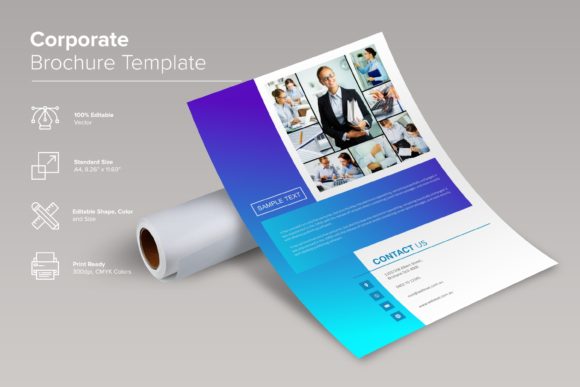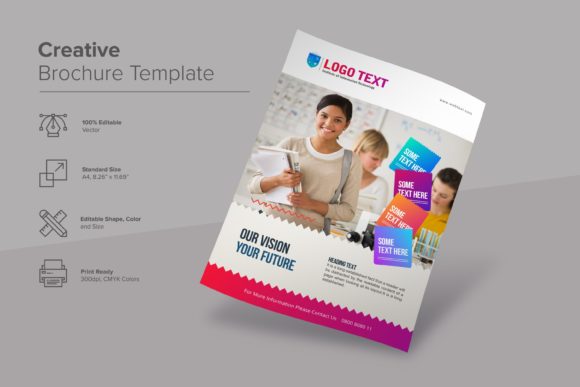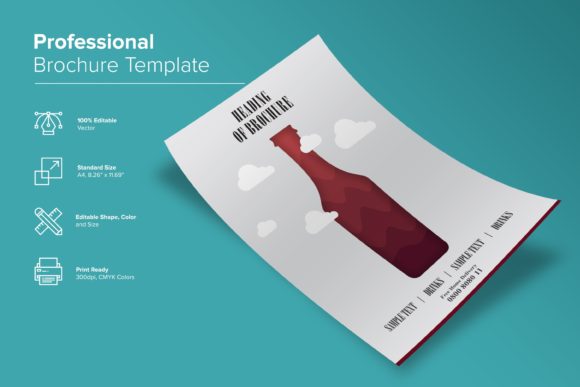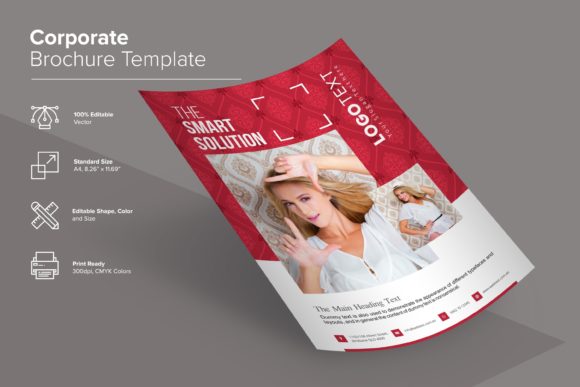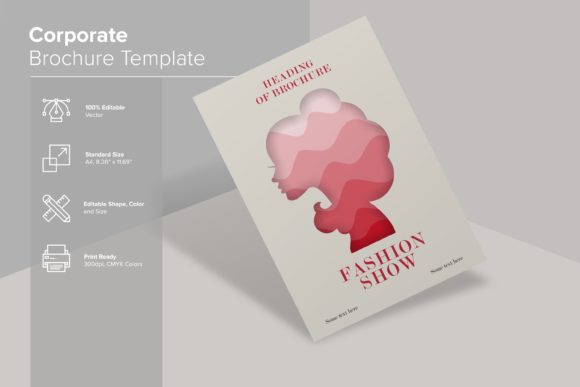
Fashion Show Brochure Template
A well-designed Fashion Show Brochure Template does more than list designers and schedules—it sets the tone, communicates brand identity, and creates anticipation before the first model steps onto the runway. In today’s fast-paced creative economy, where attention spans are short and visual expectations are high, a cohesive, professional brochure isn’t optional—it’s essential. Whether you’re organizing an independent boutique showcase, a university fashion week, or a full-scale industry event, your brochure serves as both invitation and artifact: a tangible extension of your vision that lives on in print, on screens, and in memory.
Why This Template Fits Modern Creative Workflows
Today’s creators—from freelance stylists to small-label founders—rarely have large design teams or months to spare. They need tools that accelerate execution without sacrificing polish. That’s where this Fashion Show Brochure Template stands out: it’s built for speed *and* flexibility. Unlike static PDFs or rigid Canva layouts, this template is rooted in vector-based design (created in Adobe Illustrator), meaning every element—text boxes, color swatches, layout grids, and logo placeholders—is fully editable, scalable, and resolution-independent. You’re not just swapping out names—you’re adjusting hierarchy, experimenting with typography pairings, and adapting spacing to match your event’s energy—all without starting from scratch.
This aligns directly with how professionals work now: iteratively, collaboratively, and across platforms. A designer might tweak colors in Illustrator, share a PDF proof with a venue coordinator, then export a JPEG version for Instagram Stories—all from the same source file. No reformatting. No pixelation. No last-minute panic when a printer requests CMYK at 300 dpi (which this template delivers, out of the box).
More Than Layout: How Logo Integration Elevates Your Entire Brand Experience
The brochure doesn’t exist in isolation. It’s one touchpoint in a broader ecosystem—your website, social bios, backstage signage, merchandise, email newsletters, and even digital ads. That’s why this package includes a professionally crafted, vector-based logo designed specifically to complement the brochure’s aesthetic. And here’s what makes it different: it’s not a locked-in graphic. It’s 100% editable—every anchor point, stroke, and gradient is accessible. Change the font to match your label’s voice. Swap Pantone references for web-safe hex codes. Adjust proportions for a square Instagram profile or a wide banner at the venue entrance.
We’ve included new creative ideas to enjoy the process of logo design—not as a technical chore, but as an expressive step in defining who you are. You don’t need design experience to begin. Choose the version that resonates most, update the text and colors to reflect your palette and personality, and go. That simplicity is intentional. It reflects a shift in creative culture: less gatekeeping, more doing. Less waiting for “the perfect logo,” more launching with something authentic, adaptable, and ready to grow with you.
Real-World Use Cases Across Industries and Roles
Consider how this works in practice:
- A boutique owner uses the brochure template to promote their seasonal trunk show—adding local vendor logos, QR codes linking to pre-order pages, and a clean, minimalist logo that appears identically on hang tags and Shopify banners.
- An educator coordinates a student fashion exhibition and needs consistency across printed programs, classroom posters, and a virtual gallery landing page. The layered AI file lets them isolate elements—like a monochrome version for photocopies or a vibrant variant for digital slides.
- A freelance stylist building a personal brand selects the bold, typographic logo option, modifies the kerning for impact, and drops it into Canva templates for pitch decks and LinkedIn headers—knowing the vector origin ensures crispness at any size.
- A nonprofit arts collective adapts the layout for accessibility: increasing line height, using high-contrast color variants, and exporting a tagged PDF for screen readers—all possible because layers are organized logically and fonts are open-source and licensed for reuse.
Each scenario benefits from the same foundational strengths: compatibility with both Illustrator and CorelDRAW, inclusion of free fonts with clear licensing documentation, and a structured folder system (Job Info, Readme, Fonts.txt) that removes guesswork. There’s no hunting for missing assets or deciphering cryptic layer names—just clarity, control, and continuity.
Design Integrity Meets Practical Delivery
It’s easy to assume “easy to customize” means “simplified to the point of generic.” This template proves otherwise. The clean, professional aesthetic avoids trend-chasing—no overused gradients, no forced asymmetry, no placeholder imagery begging for replacement. Instead, it offers intelligent structure: balanced margins, thoughtful typography scale, intuitive color zones, and ample white space that invites breathing room—not clutter.
The files included—AI, EPS, CDR, PDF, and JPEG—cover every production need. Need to send press materials? Use the PDF. Preparing for offset printing? The CMYK EPS is ready. Sharing with a non-designer stakeholder? Export a JPEG preview instantly. Even the JPEG maintains 300 dpi resolution, so it holds up in high-fidelity presentations or printed handouts.
And because the logo is vector-based and fully layered, scaling isn’t theoretical—it’s daily reality. Enlarge it for a 6-foot banner without blurring. Shrink it to fit a business card corner without losing legibility. Embed it in an animated social post without pixelation. That reliability matters—not just for aesthetics, but for credibility. When your logo looks sharp everywhere, your brand feels intentional, capable, and trustworthy.
What’s Included—and Why It Matters
Beyond the core files, this package includes practical support resources:
- Free fonts, clearly linked and documented—no licensing surprises or substitution errors.
- A Readme file that walks through customization steps, layer naming conventions, and best practices for color mode switching.
- Job Info outlining recommended usage scenarios, ideal paper stocks for print, and tips for optimizing JPEG exports for web use.
- Fonts.txt with direct download links and attribution guidance—respecting creator rights while simplifying implementation.
This isn’t just a bundle of files. It’s a workflow companion—one that anticipates questions before they arise and removes friction from execution. If you’re unsure whether your logo will hold up on dark-mode websites or how to adjust bleed settings for a local print shop, help is already embedded in the package.
Final Thought: Visibility Starts With Consistency
Improving visibility isn’t about shouting louder. It’s about appearing reliably, cohesively, and confidently across every channel your audience encounters you. A Fashion Show Brochure Template that integrates seamlessly with your logo—and extends naturally into digital, print, and physical spaces—does exactly that. It turns scattered impressions into a unified presence. It helps attendees remember not just the clothes, but the feeling of being part of something thoughtfully curated.
You don’t need to be a designer to own your visual identity. You just need the right foundation—one that respects your time, supports your growth, and scales with your ambition. Choose the version that fits your voice, personalize the text and colors, and start sharing your story—clearly, consistently, and completely.