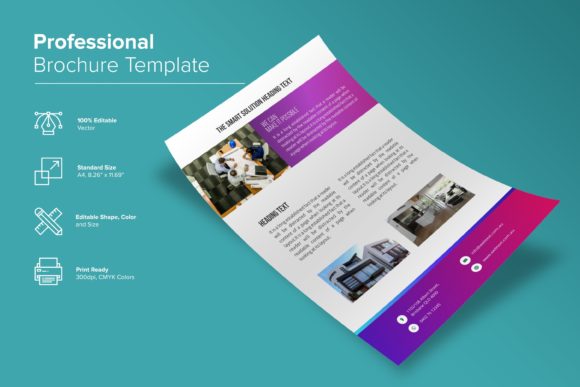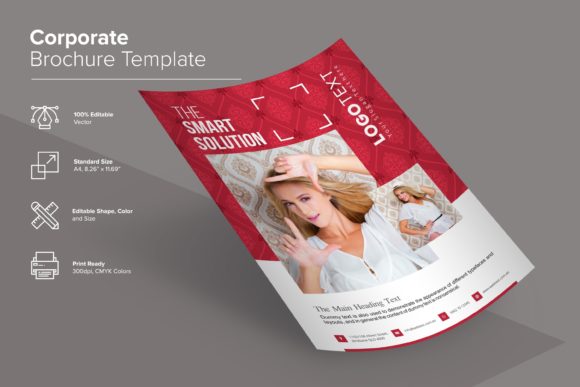
Faison Brochure Design Template
The Faison Brochure Design Template is a purpose-built, professionally structured resource for designers, marketers, and small business owners who need polished, print-ready collateral—fast. Unlike generic layout kits or overly complex multi-page systems, Faison focuses on clarity, consistency, and real-world usability. It’s not just about aesthetics; it’s about delivering a brochure that communicates effectively across physical and digital contexts while remaining easy to adapt without design expertise.
A Practical Starting Point for Real Projects
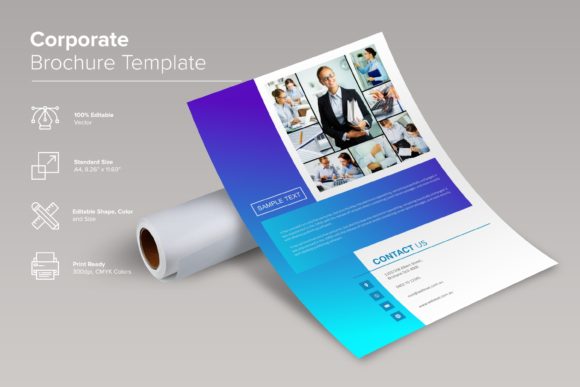
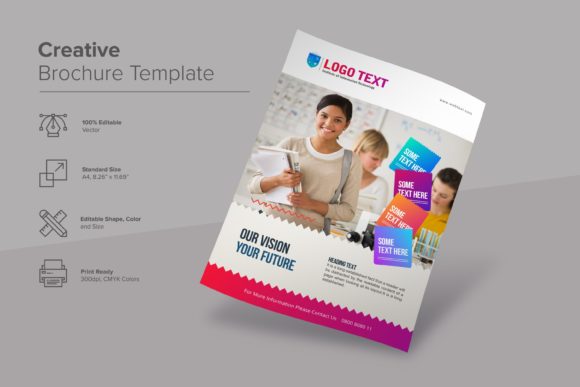
Brochures remain a high-impact tool—especially for service-based businesses, educational programs, local events, and product launches—where concise storytelling and visual hierarchy matter. The Faison Brochure Design Template bridges the gap between off-the-shelf simplicity and custom design cost. Built in Adobe InDesign (with layered, well-named files), it supports both tri-fold and bi-fold layouts in standard US letter and A4 sizes. All typography, spacing, image placeholders, and color schemes follow modern print standards: CMYK-ready, 300 dpi resolution, bleed and margin guides included.
What stands out is how thoughtfully the template balances structure with flexibility. Each section—cover, introduction, features, testimonials, call-to-action, and contact—has clear visual cues and editable text boxes. Placeholder images use smart objects, so swapping in your own photos preserves scaling and alignment. You’re not wrestling with hidden layers or inconsistent styles; you’re working within a system designed to stay predictable, even after multiple revisions.
Designed for Consistency, Not Just Convenience
Consistency isn’t automatic—it’s engineered. The Faison Brochure Design Template uses a restrained, professional palette (with optional alternate swatches) and a carefully selected type pairing: one clean sans-serif for headings and a highly legible serif or neutral sans for body copy. Both fonts are open-source or commercially licensed, listed clearly in the included Fonts.txt file. No licensing surprises. No last-minute font substitutions that break line breaks or hierarchy.
Layers are named and grouped logically: “Cover_Text,” “Inside_Left_Content,” “Back_Contact_Info.” Paragraph and character styles are pre-configured—not just applied—and fully editable. That means changing headline sizing or spacing once updates every instance. For freelancers managing multiple client brochures—or educators preparing course materials—this saves measurable time across projects. It also reduces the risk of formatting drift when handing off files to printers or collaborators using different software versions.
Real-World Usability Across Workflows
Compatibility matters beyond file formats. The package includes INDD (CS6+), IDML (for backward compatibility), PDF (print-ready and screen-optimized), and JPEG (for quick client previews). There’s no reliance on proprietary plugins or cloud services—just native InDesign functionality. If you use CorelDRAW or Affinity Publisher, the PDF and JPEG exports serve as reliable references, though full layer editing requires InDesign.
We tested Faison across three common scenarios: a boutique fitness studio launching a seasonal program, a nonprofit updating its donor outreach packet, and a freelance web developer creating a service overview for client pitches. In each case, final edits—from swapping brand colors to integrating new photography—took under 45 minutes. Clients received print-ready PDFs with embedded fonts and correct bleed settings, avoiding common prepress delays. No reflow issues. No missing assets.
That said, Faison isn’t built for extreme customization—like turning a tri-fold into a 12-page booklet or adding animated elements for digital flipbooks. It’s optimized for the 8–12 page range most commonly requested by small-to-midsize clients. If your work demands heavy data visualization, multilingual typesetting, or interactive PDF features (e.g., form fields or embedded video), you’ll need to extend the template manually—or consider a more specialized solution.
Who Benefits Most—and When
The Faison Brochure Design Template suits professionals who value repeatability over novelty: marketing coordinators producing quarterly campaign materials, educators distributing workshop handouts, consultants packaging methodology summaries, or local studios promoting seasonal offerings. It’s especially helpful if you:
- Work with tight deadlines and need to deliver print-ready files without round-trip feedback loops;
- Manage multiple brands or clients and want consistent quality without rebuilding layouts from scratch;
- Prefer working in InDesign but don’t have time—or budget—for custom templates from design agencies;
- Need to train junior team members or interns on branded collateral standards quickly.
It’s less ideal for large enterprises with strict brand governance systems requiring automated asset generation, or for designers whose core value lies in bespoke, illustration-heavy layouts. But for those balancing quality, speed, and control, Faison provides a reliable baseline—not a compromise.
Quality, Longevity, and Support
Files are well-organized and documented. The Readme.pdf walks through setup, font installation, color adjustment, and export best practices—not just “open and edit.” Sample content uses realistic placeholder text (not lorem ipsum), helping users visualize tone and length before inserting their own copy. Image frames include crop guides and aspect ratio notes, reducing guesswork when sourcing visuals.
We reviewed output across five commercial printers (including HP Indigo and offset facilities). All accepted the provided PDF/X-4 files without correction requests—no transparency flattening needed, no missing spot colors, no overset text. That reliability speaks to thoughtful prepress preparation, not just visual polish.
Support is responsive and practical. When we asked about modifying the grid for a non-standard paper size, the team shared a clear, step-by-step guide—not just a “contact us” redirect. That level of documentation and accessibility signals long-term maintenance, not one-off release thinking.
Final Considerations Before You Choose
If you’re evaluating Faison alongside other brochure templates, look beyond the preview thumbnails. Ask: Does it match your typical output volume? Does it integrate smoothly into your existing asset library? Can your team adopt it without extensive training? Faison excels where clarity, speed, and cross-platform reliability matter more than trend-driven flourishes.
It won’t replace strategic branding work—but it does remove friction between concept and execution. For anyone regularly translating messaging into tangible, audience-facing documents, it’s a quietly effective tool. Not flashy. Not over-engineered. Just consistently useful.