Bumblebee Wordcloud Tumbler
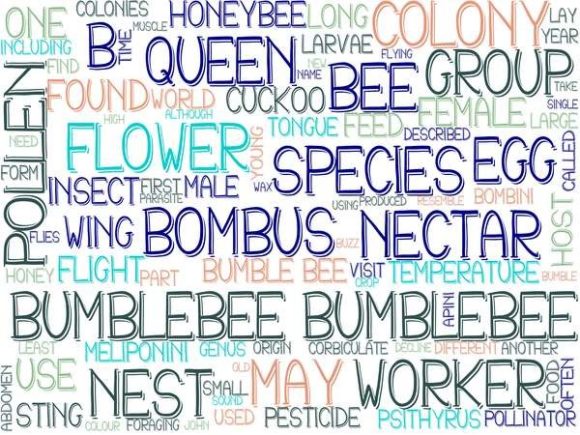
The Bumblebee Wordcloud Tumbler isn’t just another decorative graphic—it’s a precision-crafted visual tool designed to distill meaning, reinforce messaging, and elevate design decisions across real-world applications. Unlike generic word clouds, this version combines typographic intentionality, balanced composition, and scalable vector fidelity—making it suitable for both digital interfaces and high-resolution print outputs. Its name reflects its dual nature: “Bumblebee” signals energy, pollination of ideas, and subtle complexity; “Tumbler” implies adaptability—rotating seamlessly between contexts without losing clarity or impact.
Why Strategic Clarity Matters More Than Visual Novelty
Many creators reach for word clouds when they need to communicate themes quickly—but defaulting to randomness undermines effectiveness. A thoughtfully applied Bumblebee Wordcloud Tumbler supports strategic goals by turning qualitative input—like survey responses, brand values, customer feedback, or editorial themes—into a scannable, emotionally resonant visual summary. It works best when the underlying data has been curated, weighted, and aligned with a specific objective—not just aggregated.
For example, an educator designing a workshop on inclusive leadership might use the Bumblebee Wordcloud Tumbler to visualize recurring terms from participant pre-surveys: “listening,” “accountability,” “curiosity,” “bias,” “language.” That cloud becomes more than decoration—it anchors discussion, informs slide design, and appears consistently across handouts, digital banners, and printed facilitator guides. The consistency builds cognitive recognition; the curation reinforces intent.
Where It Fits Into Real Workflows
The versatility of the Bumblebee Wordcloud Tumbler lies in its functional neutrality—not in how many things it *can* do, but in how reliably it serves distinct phases of work:
- Branding & Positioning: Use it early in identity development to map core attributes (e.g., “trusted,” “nimble,” “grounded,” “insightful”) into a visual motif that informs color, typography, and iconography choices—not as final logo art, but as a reference layer during mood board creation.
- Customer Experience Design: Translate support ticket themes or NPS open-ended comments into a Bumblebee Wordcloud Tumbler for internal alignment. When shared with product and marketing teams, it surfaces shared language and uncovers misalignment before launch.
- Educational & Editorial Planning: Publishers building a new e-book series or curriculum module can generate a Bumblebee Wordcloud Tumbler from chapter summaries or learning outcomes—then use it to guide cover design, section dividers, and even navigation icons in interactive PDFs.
- Event & Campaign Execution: For a conference or product launch, embed the Bumblebee Wordcloud Tumbler into signage, email headers, and social media carousels—not as filler, but as a consistent thematic throughline that reinforces what attendees should remember.
How to Approach It Intentionally—Not Automatically
Using the Bumblebee Wordcloud Tumbler well begins with asking three questions before opening the file:
- What decision or understanding does this visual need to support? If the answer is vague (“make it look nice”), pause. Reframe: Is it meant to highlight contrast? Emphasize frequency? Signal evolution over time? Anchor emotional tone?
- Who sees this—and what do they already know? A word cloud on a trade show banner assumes 3-second attention. One inside a client strategy deck assumes 30 seconds of focused reading. Adjust density, hierarchy, and labeling accordingly.
- What happens after someone sees it? Does it lead to action (e.g., scanning a QR code), reflection (e.g., journaling prompt), or alignment (e.g., team discussion)? Design the surrounding context—the headline, caption, or adjacent visuals—to carry that forward.
Without these filters, the Bumblebee Wordcloud Tumbler risks becoming visual noise: aesthetically coherent but functionally inert. Its strength lies not in being everywhere, but in being right there—where meaning needs reinforcement, not replacement.
Risks of Context-Free Use
Applying the Bumblebee Wordcloud Tumbler without grounding in purpose introduces tangible risks:
- Misleading emphasis: Raw word frequency doesn’t equal importance. “Very” or “really” may dominate a transcript but contribute little meaning. Without filtering stop words, adjusting weights, or applying domain-specific logic, the cloud obscures more than it reveals.
- Brand dilution: Dropping the same Bumblebee Wordcloud Tumbler across unrelated campaigns—say, a sustainability report and a holiday promotion—creates conceptual dissonance. Consistency matters, but so does contextual appropriateness.
- Operational friction: Using low-res or non-vector versions for large-format printing (banners, posters) leads to pixelation or costly rework. Similarly, embedding unoptimized raster files in email templates increases load time and harms accessibility.
These aren’t flaws in the tool—they’re symptoms of skipping the planning step. The Bumblebee Wordcloud Tumbler amplifies intention; it doesn’t substitute for it.
Practical Integration Tips Across Mediums
Here’s how experienced designers and communicators integrate the Bumblebee Wordcloud Tumbler without overextending:
- For Printables & Packaging: Export as SVG or high-DPI PDF. Layer text elements separately to allow localization or seasonal updates—don’t bake in static phrases like “Spring 2024” unless they’re truly fixed.
- For Social Media & Web: Use CSS clipping paths or SVG masks to animate individual words on hover or scroll—subtly reinforcing interactivity without sacrificing readability.
- For Brand Guidelines: Document not just the file, but usage rules: minimum size, acceptable backgrounds, prohibited modifications (e.g., stretching, recoloring beyond the approved palette), and pairing principles with body type.
- For Education & Training: Turn the Bumblebee Wordcloud Tumbler into an active learning tool—ask participants to rearrange words by priority, group them into themes, or annotate why certain terms appear larger than others.
Long-Term Value Beyond the First Use
The highest-return use of the Bumblebee Wordcloud Tumbler isn’t one-off execution—it’s iterative refinement. Treat it as a living artifact:
Revisit it quarterly alongside performance data. If “community” grows in prominence across customer interviews but shrinks in your current cloud, that’s not a design failure—it’s insight. Update the weighting. Adjust the layout. Let the visual evolve as your understanding deepens. Over time, a series of Bumblebee Wordcloud Tumblers—dated, versioned, and annotated—becomes a visual timeline of strategic focus, helping teams recognize patterns, course-correct early, and articulate shifts in positioning with evidence, not instinct.
This approach transforms the Bumblebee Wordcloud Tumbler from a static asset into a lightweight diagnostic instrument—one that supports learning, alignment, and measurable progress when used with discipline and care.
Final Thought: Tools Serve Strategy, Not the Other Way Around
The Bumblebee Wordcloud Tumbler earns its place in your toolkit not because it’s novel or widely used, but because it responds well to thoughtful constraints. It rewards preparation. It scales with intention. And when matched to the right goal—at the right moment—it quietly strengthens communication, sharpens focus, and makes abstract ideas feel tangible. That’s not design magic. It’s design maturity.