Biophysics Wordcloud Wallpaper: A Visual Resource for Science Communication and Design
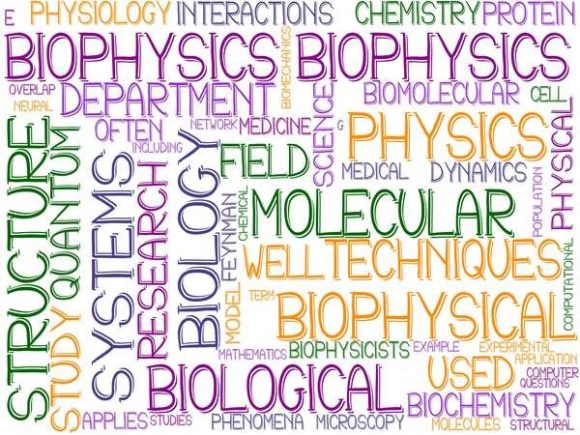
Biophysics Wordcloud Wallpaper is a specialized digital design asset that visualizes key concepts, terminology, and themes from the interdisciplinary field of biophysics—using typography as both information and aesthetic. Unlike generic word clouds or decorative wallpapers, this resource integrates domain-specific vocabulary (e.g., “membrane potential,” “fluorescence resonance,” “molecular dynamics,” “ion channels,” “protein folding”) into a balanced, scalable layout optimized for clarity, visual harmony, and thematic coherence. It’s delivered as a high-resolution, editable file—typically in PNG, JPG, or vector-based formats—designed for seamless integration across print and digital media.
How It Differs From Standard Word Clouds and Scientific Graphics
Most word clouds prioritize frequency over meaning: larger words reflect higher occurrence in source text, but offer little contextual hierarchy or scientific accuracy. Biophysics Wordcloud Wallpaper moves beyond that by curating terms based on conceptual weight—not just usage counts—and arranging them to reflect relationships: structural biology terms cluster near imaging-related words; thermodynamics and kinetics appear adjacent to transport and signaling phrases. The typography itself is selected for legibility at multiple scales, avoiding overly stylized fonts that compromise readability in academic or professional settings.
In contrast, scientific infographics often rely on icons, diagrams, or layered illustrations—valuable for explaining mechanisms but less adaptable for background use. Biophysics Wordcloud Wallpaper occupies a middle ground: it conveys subject-matter authority without demanding focused attention. That makes it especially useful where science needs to be present but not dominant—such as event backdrops, conference room walls, textbook chapter openers, or lab newsletter headers.
Practical Applications Across Media and Formats
This wallpaper isn’t limited to desktop backgrounds. Its adaptability stems from intentional design choices: neutral color palettes (often grayscale or soft blues/greens), consistent line weights, and non-repetitive spatial distribution. As a result, it performs well across diverse outputs:
- Promotions and invitations: Adds scholarly credibility to symposium announcements or graduate program outreach without overwhelming text.
- Branding and web design: Serves as subtle texture behind headlines on departmental websites or research group landing pages—enhancing identity while preserving accessibility contrast ratios.
- Printables and educational tools: Works as a study aid when printed at poster size, allowing students to visually map connections between subfields.
- Package design and merchandise: Appears effectively on notebook covers, tote bags, or lab coat patches—communicating specialization with restraint.
- Social media and email design: Functions as a branded background for LinkedIn banners or newsletter dividers, reinforcing expertise without competing with calls-to-action.
Because it avoids photorealistic imagery or complex gradients, Biophysics Wordcloud Wallpaper scales cleanly—from thumbnail previews on Instagram to large-format posters at scientific conferences.
Tradeoffs and Limitations to Consider
Like any specialized resource, Biophysics Wordcloud Wallpaper has boundaries. It does not replace explanatory visuals: you wouldn’t use it to teach how FRET works or illustrate a cryo-EM workflow. Nor does it substitute for data-driven graphics—there’s no quantitative axis, error bars, or statistical annotation. Its strength lies in ambient communication, not instruction or analysis.
Also, customization options vary. Some versions allow minor recoloring or term substitution; others are fixed layouts. If your project requires precise alignment with institutional branding (e.g., mandated Pantone colors or logo placement), verify whether the file includes layered source files (like AI or PSD) before licensing. Vector-based variants support infinite scaling but may require basic design software to edit; raster versions are plug-and-play but have resolution ceilings.
Finally, context matters. In highly technical documents—say, a grant proposal appendix or peer-reviewed manuscript supplement—this wallpaper would be inappropriate. Its role is atmospheric reinforcement, not primary content delivery.
When It Fits—and When It Doesn’t
Biophysics Wordcloud Wallpaper is most effective when your goal is to signal domain familiarity without exposition. For example:
- A university department updating its website refreshes credibility across pages with consistent, discipline-specific visual language.
- An online course on computational biophysics uses the wallpaper as a section divider in an LMS—reinforcing topic focus between modules on Monte Carlo simulations and Brownian dynamics.
- A startup developing biosensors applies it to pitch deck backgrounds, subtly aligning with investor expectations around technical depth.
Conversely, it’s less suitable if you need:
- Narrative flow: A timeline of biophysics milestones or a step-by-step protocol graphic will serve better.
- Accessibility-first requirements: While legible, dense typographic fields can challenge screen readers or low-vision users if used as primary content—always pair with descriptive alt text and supporting plain-language summaries.
- Real-time data integration: Unlike dynamic dashboards or live word cloud generators, this is a static, pre-curated asset.
Comparison With Alternative Approaches
Designers evaluating resources often weigh Biophysics Wordcloud Wallpaper against several alternatives:
- Custom illustration: Offers full control and uniqueness but demands time, budget, and subject-matter collaboration. A commissioned piece might clarify a specific mechanism—but won’t scale across dozens of touchpoints as efficiently.
- Stock scientific imagery: Photos of microscopes or abstract DNA helices are widely available but risk cliché or oversimplification. They also lack the lexical precision that signals authentic engagement with biophysics discourse.
- DIY word cloud tools: Free generators let users input their own text, but results often suffer from poor spacing, inconsistent sizing, or uncurated vocabulary—undermining disciplinary authenticity. Building a meaningful version from scratch requires domain knowledge *and* design skill.
- Typography-only posters: These exist, but many prioritize aesthetics over scientific relevance—listing famous scientists or quotes rather than operational concepts. Biophysics Wordcloud Wallpaper bridges that gap by centering working terminology.
The choice hinges on balance: time, budget, consistency needs, and intended audience. If you’re producing one-off materials for internal use, a simple DIY version may suffice. For public-facing, multi-channel campaigns where coherence and credibility matter, a professionally curated Biophysics Wordcloud Wallpaper delivers measurable efficiency and resonance.
Making an Informed Decision
Before selecting or commissioning a Biophysics Wordcloud Wallpaper, consider these practical questions:
- What proportion of your audience has formal training in biophysics? If many are generalists or students, avoid overly niche jargon unless paired with explanatory context.
- Which output formats are essential? Confirm resolution and file type compatibility with your print vendor or CMS.
- Do you need multilingual support? Most versions use English terminology; adapting for other languages requires careful re-curation—not just translation—to preserve conceptual accuracy.
- Will it coexist with logos, photos, or charts? Test contrast and visual hierarchy in mockups early.
No single visual resource solves every communication challenge. But for professionals bridging science and design—whether educators, researchers, science communicators, or marketing specialists—Biophysics Wordcloud Wallpaper offers a rare combination: rigor, flexibility, and quiet authority. It doesn’t shout expertise—it embodies it, quietly and consistently, across the surfaces people actually see.