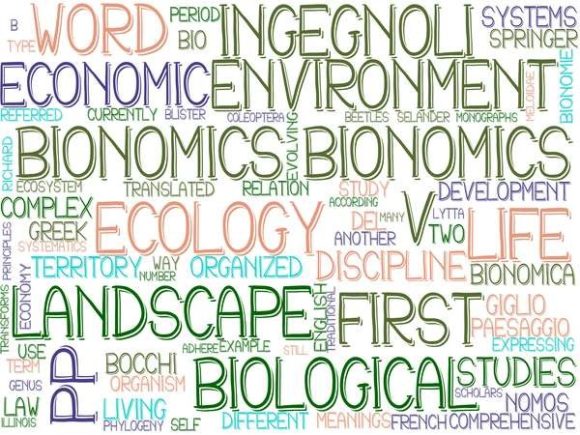
Bionomics Wordcloud Skinny Tumbler
The Bionomics Wordcloud Skinny Tumbler is a digital design asset—a downloadable vector or high-resolution raster file—featuring a curated, stylized word cloud centered on themes related to bionomics: sustainability, systems thinking, ecological design, biomimicry, regenerative practices, and interdisciplinary science. Unlike generic word clouds, this version is optimized for visual cohesion and professional application, with balanced typography, intentional spacing, and a refined color palette suitable for both print and digital use. Its “skinny tumbler” format refers to its tall, narrow aspect ratio—ideal for vertical layouts such as banners, social media posts, book spines, or slim packaging panels.
People exploring this resource typically fall into two broad groups: designers seeking ready-to-use, conceptually grounded visual elements, and subject-matter professionals—educators, researchers, sustainability consultants, or science communicators—who need credible, on-brand graphics for outreach. The appeal lies not in novelty alone, but in how efficiently it bridges domain-specific content with design utility. For instance, a university department launching a new bionomics certificate program may use the word cloud across a flyer, course syllabus, and event banner—ensuring consistent messaging without commissioning custom illustration each time.
One key benefit is time efficiency. Creating a thematically accurate, visually balanced word cloud from scratch requires sourcing relevant terminology, weighting terms by conceptual importance, selecting appropriate fonts and colors, and testing legibility across sizes and backgrounds. The Bionomics Wordcloud Skinny Tumbler eliminates that iterative process. It’s pre-optimized for readability at small scales (e.g., business cards or app icons) and scalable for large-format prints (e.g., conference backdrops). Its vector format (typically provided as EPS or SVG) supports clean resizing, while high-DPI raster versions (PNG, JPG) ensure compatibility with platforms that don’t support vector uploads.
However, tradeoffs exist. Because the word selection and layout are fixed, customization is limited without design software and intermediate skills. Users needing to substitute terms—say, replacing “circular economy” with “industrial symbiosis”—must edit the file manually, which may affect typographic harmony or alignment. Similarly, the preset color scheme may not match an existing brand palette; recoloring is possible but requires familiarity with tools like Adobe Illustrator or Affinity Designer. Those expecting plug-and-play compatibility with Canva or PowerPoint templates should verify file format support and test rendering before finalizing layouts.
Another consideration is licensing scope. Most reputable providers grant broad usage rights—including commercial applications—but restrictions often apply to resale or redistribution of the unaltered file. If you plan to include the word cloud in a template sold on marketplaces like Creative Market or Etsy, confirm whether the license permits derivative commercial distribution. Also, check whether attribution is required for public-facing uses, particularly in academic or nonprofit contexts where transparency matters.
The Bionomics Wordcloud Skinny Tumbler fits strongly when clarity, thematic relevance, and vertical real estate are priorities. It works well for promotional materials tied to conferences (e.g., Bioneers or Biomimicry Summit), educational programs, research grant proposals, or sustainability reports where visual shorthand helps convey complexity quickly. Its narrow shape suits Instagram carousels, podcast cover art, ebook chapter headers, or even textile mockups for eco-design workshops. In branding, it can serve as a subtle background texture behind logos or as a motif in pattern-based packaging—especially for products emphasizing ecological intelligence or systems literacy.
Conversely, alternatives may be preferable in several scenarios. If your project demands full linguistic control—such as tailoring terminology to a region-specific initiative (e.g., incorporating Indigenous ecological knowledge terms)—a custom-built word cloud offers greater fidelity. Free online generators (like WordClouds.com or Jason Davies’ tool) provide immediate flexibility but lack the curated vocabulary, typographic polish, and thematic rigor of the Bionomics Wordcloud Skinny Tumbler. For highly branded campaigns requiring strict color matching or logo integration, a bespoke illustration—commissioned from a designer familiar with bionomics concepts—may deliver stronger cohesion than adapting a pre-made asset.
Practical decision-making starts with clarifying your primary use case. Ask: Is this for internal communications or public-facing materials? Will it appear alongside other branded assets—or stand alone? What’s your technical comfort level with editing vector files? If you’re producing a one-off workshop handout and need something fast, accessible, and conceptually aligned, the Bionomics Wordcloud Skinny Tumbler is a pragmatic choice. If you’re developing a multi-year campaign with evolving messaging, investing in modular design components—even a simple set of editable word cloud templates—may offer longer-term adaptability.
Also consider audience expectations. In academic or policy settings, visual credibility matters: terms must reflect current discourse, avoid oversimplification, and exclude buzzwords lacking scholarly grounding. The Bionomics Wordcloud Skinny Tumbler generally reflects peer-informed terminology, but users should still scan the included words for relevance to their specific context. A term like “resilience” appears in many sustainability resources—but depending on discipline, it may carry distinct meanings in ecology versus engineering. When in doubt, cross-reference with established frameworks (e.g., the Doughnut Economics model or the UN SDGs) to assess alignment.
Finally, evaluate scalability beyond initial use. While the skinny tumbler format excels vertically, it may require cropping or reformatting for horizontal applications like posters or website hero sections. Some users pair it with complementary assets—such as minimalist icons representing systems loops or bioregional maps—to build layered, narrative-rich visuals. Others treat it as a starting point: extracting individual words to repurpose as bullet points, section headers, or interactive web elements. Its value increases when treated as part of a broader visual language—not as a standalone decorative flourish.
In summary, the Bionomics Wordcloud Skinny Tumbler serves a specific niche: professionals who need a trustworthy, production-ready visual anchor for bionomics-related communication. It balances conceptual accuracy with practical design constraints. Success depends less on the asset itself and more on how thoughtfully it’s integrated—aligned with audience needs, technical capacity, and long-term communication goals. For those evaluating options, it’s worth comparing not just features, but fit: Does it simplify your workflow without compromising message integrity? Does it support—not distract from—the ideas you aim to share?