Badminton Wordcloud Book Cover
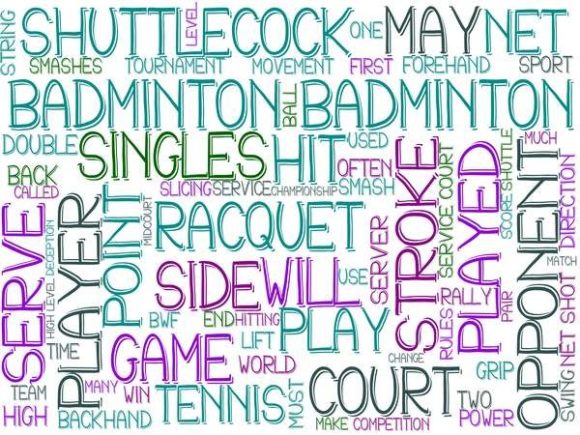
A Badminton Wordcloud Book Cover is a visually rich, typography-driven design where key terms—like “smash,” “shuttlecock,” “net,” “racket,” “deuce,” “clear,” “drop shot,” and “doubles”—are arranged artistically to form the shape or layout of a book cover. It’s not just decorative: each word reflects themes, values, or content focus—ideal for sports memoirs, coaching guides, tournament programs, school PE resources, or fan zines. The cloud adapts fluidly: words can scale by frequency, cluster by theme (e.g., tactics vs. equipment), or align with badminton’s dynamic motion—curving like a shuttle’s flight path or radiating from a central net graphic.
Why This Matters—Depending on Who You Are
For a high school PE teacher, a Badminton Wordcloud Book Cover isn’t about aesthetics alone—it’s a teaching tool. When printed as a large poster or embedded in a unit handout, it sparks vocabulary recall, supports ELL learners, and makes terminology tangible. One educator used it as a “word hunt” activity: students identified terms, defined them, then matched each to a real-game scenario. No extra prep. Just clarity, engagement, and quiet confidence in lesson delivery.
A self-published coach writing their first ebook sees this differently. They need credibility fast—without hiring a designer. A clean, sport-specific wordcloud signals expertise and intentionality. It tells readers, “This isn’t generic advice—it’s grounded in actual play.” They might pair “footwork,” “rotation,” and “recovery” prominently, subtly reinforcing their coaching philosophy before a single page is read.
For a local club organizer designing a tournament program or welcome brochure, flexibility matters most. They’ll use the same Badminton Wordcloud Book Cover asset across formats: scaled down for a business card (featuring “2024 City Open,” “Singles Finals,” “Volunteer Sign-Up”), enlarged for a banner, or simplified into a monochrome version for letterpress-printed thank-you cards. Consistency builds recognition—without needing five different designers.
How Skill Level Shapes What You Look For
Beginners often prioritize ease and speed. If you’ve never opened Canva or Adobe Express, look for Badminton Wordcloud Book Cover files that come with editable templates—preferably in .PNG (for quick drag-and-drop) or layered .PSD/.AI (if you plan to grow your skills). A well-structured file means you can swap “backhand” for “lob” in under 30 seconds—or change colors to match your club’s logo without breaking alignment.
Experienced designers care more about precision and output quality. They’ll check whether the wordcloud uses vector paths (not rasterized text), supports CMYK for print runs, and includes font licenses for commercial use. One freelance graphic designer told us they rejected three otherwise beautiful options because the fonts weren’t embeddable—causing reflow issues when clients edited text later. That kind of detail separates usable assets from frustrating ones.
Hobbyists and scrapbookers value texture and layering potential. They might print the wordcloud on kraft paper, cut out individual words for collage, or overlay it with vellum and stitching. A high-resolution TIFF version with transparent background gives them room to experiment—no pixelation, no awkward white edges.
Real Projects, Real Uses
- Educators: Embed a simplified Badminton Wordcloud Book Cover in Google Slides as a slide background—then annotate live during class discussion. Students see terminology *in context*, not isolation.
- Bloggers & social media managers: Crop a section (“serve,” “ace,” “let”) into an Instagram Story highlight cover. Paired with a short tip video, it becomes a visual anchor—not just decoration.
- Small press publishers: Use the same wordcloud across a series—e.g., varying only the title treatment and author name—to create instant brand cohesion for a “Sport Skills Library” collection.
- Home décor enthusiasts: Print a muted-tone version on canvas or framed poster paper. It works in a game room, rec center lounge, or even a physiotherapy office waiting area—subtle, sporty, conversation-friendly.
- Textile designers: Import the vector file into pattern software, rotate clusters, and repeat at scale for custom badminton-themed fabric—great for tote bags, warm-up jackets, or gym bag linings.
What to Weigh Before You Choose
Ask yourself: What’s my next step with this? If you’re ordering 500 physical books, confirm the file meets printer specs—300 DPI minimum, bleed included, fonts outlined. If you’re building a Canva-based email newsletter series, a .SVG version may save time and keep sharpness intact across devices.
Consider longevity. A wordcloud built around trending slang (“cheugy smash,” “vibe check rally”) may feel fresh today—but won’t age well in a textbook or archival program. Timeless terms like “grip,” “baseline,” “shuttle speed,” and “court dimensions” retain relevance across generations of players and coaches.
Commercial use? Read the license carefully. Some free downloads allow personal projects only; others permit resale of printed goods (like magnets or stickers) but prohibit embedding in SaaS platforms or digital templates sold on marketplaces. When in doubt, opt for a clearly licensed, attribution-free option—even if it costs a few dollars. It saves time, stress, and potential takedowns later.
Final Thought: Match the Tool to Your Intent
A Badminton Wordcloud Book Cover isn’t magic—it’s a focused communication tool. Its power comes from how thoughtfully it’s applied. A student creating a final project benefits from simplicity and clarity. A marketing director launching a new racquet line needs versatility and polish. A parent organizing a youth camp wants warmth and approachability—not jargon overload.
You don’t need to use every format listed—stickers, banners, e-books, home décor—unless your goals genuinely span those areas. Start where your audience meets you: on the page, screen, or shelf. Let the words do the work—then get back to what matters most: coaching, teaching, creating, playing, or sharing the game you love.