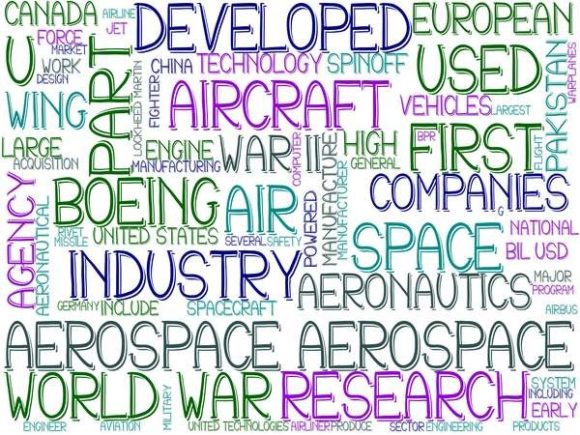
Aerospace Wordcloud Sublimation
Imagine turning the essence of aerospace—words like “orbit,” “thrust,” “composite,” “payload,” “ion drive,” and “aerodynamics”—into a visual signature. Not as dry text, but as a layered, balanced, and aesthetically resonant wordcloud—then transferring it seamlessly onto fabric, ceramic, metal, or polymer using sublimation. That’s Aerospace Wordcloud Sublimation: a precise fusion of thematic language, typographic design, and heat-activated dye transfer technology.
It’s not just printing words on a mug. It’s about capturing the spirit of flight, engineering, and exploration in a format that feels intentional—not decorative, but meaningful. The wordcloud itself is carefully curated: font weight, size hierarchy, and spatial flow reflect technical emphasis (e.g., “lift” larger than “rivet”), while sublimation ensures those words become part of the material—not a layer on top.
Why This Matters—Depending on Who You Are
For educators and science communicators, Aerospace Wordcloud Sublimation bridges abstract concepts and tangible engagement. A classroom poster with a swirling wordcloud of propulsion terms—“nozzle,” “specific impulse,” “combustion chamber”—becomes a conversation starter. Students don’t just read definitions; they notice patterns, ask questions, and connect vocabulary to real systems. Because sublimated prints hold up under frequent handling and cleaning, these visuals last across semesters—unlike laminated paper posters that peel or fade.
For small business owners and startups in aerospace-adjacent fields—think drone service providers, STEM tutoring platforms, or space-themed event planners—this technique offers brand cohesion without complexity. A single well-designed aerospace wordcloud can unify business cards, trade show banners, and client welcome kits. Unlike generic stock graphics, it signals domain fluency. And because sublimation works on polyester blends, it scales cleanly from a 2” magnet to a 4’ x 8’ backlit display—no redesign needed.
For hobbyists and makers, especially those exploring textile or accessory design, Aerospace Wordcloud Sublimation opens low-risk experimentation. You don’t need screen-printing equipment or vinyl cutters. With a sublimation printer, heat press, and blank substrates (like ceramic coasters or aluminum keychains), you can test variations: a minimalist monochrome cloud for sleek tech merch, or a gradient-infused version for festival apparel. Mistakes cost less than $2 in blanks—and each iteration teaches something about contrast, readability at scale, and how word density affects perception.
What Different Users Prioritize—and Why
Beginners often focus on ease of use and learning value. They want templates that work out of the box—pre-sized for common blanks (mugs, mousepads, tote bags)—and clear guidance on which fonts render cleanly during sublimation. A beginner might start with a simple circular aerospace wordcloud using only five core terms (“gravity,” “velocity,” “trajectory,” “satellite,” “navigation”) and gradually add nuance: synonyms, acronyms (like “LEO” or “GEO”), or even mission names (“Artemis,” “Voyager”).
Experienced designers care more about flexibility and commercial viability. They’ll tweak kerning manually, adjust opacity per word to suggest depth, or embed subtle vector icons (a stylized rocket, orbital path) into the cloud’s negative space. They also evaluate substrate compatibility: Will the same file yield crisp results on white polyester fabric *and* coated stainless steel? Does the color profile shift noticeably between matte and glossy finishes? These details affect client deliverables—and repeat orders.
Consumers and gift buyers look for presentation and emotional resonance. A sublimated aerospace wordcloud on a framed canvas isn’t just decor—it’s identity. For an aerospace engineer celebrating a milestone launch, it’s personal. For a parent gifting a graduation present to a mechanical engineering student, it’s aspirational. Here, subtlety matters: overly dense clouds feel chaotic; too-sparse ones lack impact. The best versions balance technical accuracy with visual calm—like a wind tunnel visualization made legible.
Real Projects, Real Uses
- Freelance graphic designers used an aerospace wordcloud as the central motif for a conference program—sublimated onto reusable polyester sleeves. Attendees kept them as functional mementos, extending brand visibility beyond the event.
- A university outreach team printed the same wordcloud on cotton-poly blend t-shirts and aluminum water bottles. The consistent visual language helped unify their “Future of Flight” summer camp materials—without needing custom illustrations for every item.
- A jewelry maker scaled a compact aerospace cloud down to fit a 1.5” titanium pendant. Using high-resolution sublimation, the fine typography remained legible—even on curved surfaces—turning technical vocabulary into wearable storytelling.
- An indie publisher embedded a modified aerospace wordcloud into the endpapers of a speculative fiction chapbook. Readers noticed it only on close inspection—a quiet nod to the book’s themes of orbital decay and human resilience.
Does This Fit Your Next Project?
If your goal is to communicate aerospace ideas with clarity and quiet confidence—rather than flash or novelty—Aerospace Wordcloud Sublimation is worth considering. It works best when:
- You value reusability: one design adapts across print, digital, and physical formats.
- You need technical credibility without jargon overload—words act as anchors, not barriers.
- Your audience responds to thoughtful detail: engineers spotting accurate terminology, students recognizing familiar concepts, or customers appreciating craftsmanship in the transfer quality.
It’s less ideal if you’re chasing trend-driven aesthetics (like glitch effects or neon gradients), need ultra-rapid turnaround for time-sensitive campaigns (sublimation requires prep time), or work primarily with natural fibers like 100% cotton—where sublimation doesn’t bond reliably.
No special software is required to begin. Free tools like TagCrowd or WordArt let you generate basic clouds; vector editors (Inkscape, Illustrator) refine spacing and sizing; and most sublimation suppliers offer substrate-specific templates. What matters most is intention: Which words carry weight for *your* audience? How do they relate—not just alphabetically, but conceptually?
Whether you’re prepping a lecture slide, branding a startup, designing a commemorative gift, or simply exploring how language and material interact, Aerospace Wordcloud Sublimation invites precision, not perfection. It’s a method that rewards attention—to terminology, to texture, to the quiet power of a well-placed word.